Tuesday, February 18, 2025

Senseless Things - Crucial Juvenalia (1995)

Senseless Things formed around the musical partnership of songwriter Mark Myers (aka Mark Keds) and Morgan Nicholls, who as 11-year-olds in Twickenham, Middlesex put together Wild Division in the early 1980's. With Keds on vocals and Nicholls on guitar, they added drummer Cass Browne and became the Psychotics, playing various venues in their local area despite still being at school. Their first gig together as the Senseless Things (named after a phrase used in Shakespeare's 'A Midsummer Night's Dream' and 'Julius Caesar') followed at the subsequently-demolished Clarendon in Hammersmith, London, in October 1986. Auxiliary members at this stage included a keyboard player, Ben, and a guitarist, Gerry, who deputised while Nicholls was studying for his O levels. When Nicholls returned in 1987 he took over the bass, while new recruit Ben Harding acquired the vacant guitarist's role, cementing the classic line-up of the band in summer 1987. Taking their musical cue from the Ramones and the Dickies, and their spiritual lead from fellow guitar outfit Mega City Four, the band's first releases were singles given away with issues of Yo Jo Jo and Sniffin' Rock fanzines, and by March 1988 the band had attracted the attention of the BBC Radio 1 DJ John Peel, who invited them to record the first of three sessions for his programme. 
After signing a deal with the Red Recording Company, their 'Up And Coming' EP came out in 1988, followed by 'Girlfriend' the following year on Way Cool Records. Their first album, 'Postcard CV', was released in 1989, capturing the energy of their concerts by packing 10 tracks into 21 minutes, and it was rounded off by 'Too Much Kissing', which was released as a single and which was to become their signature track. In 1990 the band signed with What Goes On Records, just as the label collapsed, resulting in the aborted 'Andi In A Karmann' EP, and after signing to Vinyl Solution subsidiary Decoy Records, they released the four-track EP 'Is It Too Late?', produced by Jon Langford of the Mekons. Another label change at the start of 1991 found them signed to Epic Records, and their first album for the label saw them experimenting with other styles, including acoustic songs, and the single 'Got It At The Delmar' entered the Top 50 of the UK Singles Chart. Allmusic praised 'The First Of Too Many' for its mix of bubblegum pop and gobstopping hard rock, likening the band's sound to the Who and the Replacements. Two further Top 20 singles in 'Easy To Smile' and 'Hold It Down' confirmed that 1992 was their year, topping it with a tour of the US supporting Blur. 
The band released their third album 'Empire Of The Senseless' in 1993, but the second single from it caused some controversy, with 'Homophobic Asshole' receiving critical acclaim, but failing to chart highly, and while the follow-up single, 'Primary Instinct', had a more radio-friendly title, it also had little commercial success. In 1995, the band released a final album, 'Taking Care Of Business', accompanied by two singles, 'Christine Keeler' (renamed from 'Christian Killer') and 'Something To Miss', and following farewell tours of Japan and the UK the band went into permanent hiatus. Keds very briefly became a member of The Wildhearts before forming Jolt, Trip Fontaine, The Lams, Like A Bitch and, most recently, Deadcuts. Harding went on to join 3 Colours Red in their original incarnation from 1996 to 1999, and Nicholls joined Vent 414 with Miles Hunt from The Wonder Stuff until 1997. Browne was a vital part of Gorillaz for a decade, and in 2019 formed the band Loup GarouX with Ed Harcourt. Senseless Things reformed (with Micky Wyle replacing an unavailable Nicholls) for a secret four-song performance at Islington Academy, London on 4 March 2007, as part of a gig to celebrate the life of former Mega City Four frontman Darren "Wiz" Brown, who died in December 2006. Cover art for the first two Senseless Things albums and most single releases around the same period was provided by comic artist Jamie Hewlett, creator of Tank Girl and later Gorillaz, and I've adapted one of his single sleeves for this album. 


Track listing

Disc I - 1987-1990
01 All Over You (free single with Sniffin' Rock Fanzine #6 1987) 
02 Where The Secret Lies (from the 'Up And Coming' EP 1988)
03 I Want To Go Back (from the 'Up And Coming' EP 1988)
04 I Don't Want To Talk About It (from the 'Up And Coming' EP 1988)
05 You Don't Want Me (from the 'Up And Coming' EP 1988)
06 When You Let Me Down (from the 'Up And Coming' EP 1988)
07 I'm Moving (free flexi-disc with YoJoJo magazine 1988)
08 Low-Time (free flexi-disc with YoJoJo magazine 1988)
09 (All You've Got To Do Is) Stay Together (free flexi-disc with YoJoJo magazine 1988)
10 Girlfriend (single 1989)
11 Standing In The Rain (b-side of 'Girlfriend')
12 Cruel Dub (b-side of 'Too Much Kissing' 1989)
13 Break It Away (from the various artists 'PSSST' EP 1989)
14 Tricia Don't Belong (from the abandoned 'Andi In A Karmann' EP 1990)
15 You Owe Me (from the abandoned 'Andi In A Karmann' EP 1990)
16 Never Know Why? (from the abandoned 'Andi In A Karmann' EP 1990)

Disc II - 1990-1991
01 Is It Too Late? (single 1990)
02 Andi In A Karmann (b-side of 'Is It Too Late?')
03 Ponyboy (b-side of 'Is It Too Late?')
04 Leo (b-side of 'Is It Too Late?')
05 Celebrity (b-side of 'Is It Too Late?')
06 Can't Do Anything (single 1990)
07 Can't Explain (b-side of 'Can't Do Anything')
08 Tangled Lines (b-side of 'Can't Do Anything')
09 Remember Me (free flexi-disc with issue #3 of Submerge fanzine 1991)
10 Mystery Train (b-side of 'Everybody's Gone' 1991)
11 I'm On Black And White (b-side of 'Everybody's Gone' 1991)
12 Beat To Blondie (b-side of 'Got It At The Delmar' 1991)
13 Can't Remember (b-side of 'Got It At The Delmar' 1991)
14 Easy To Smile (single 1991)
15 Hazel (b-side of 'Easy To Smile')
16 Mollylove (b-side of 'Easy To Smile')

Disc III - 1992-1995
01 Hold It Down (single 1992)
02 Crucial Juvenalia (b-side of 'Hold It Down')
03 Splitting Hairs (b-side of 'Hold It Down')
04 Apache (from the 'Ruby Trax' compilation 1992)     
05 Body Bag (b-side of 'Homophobic Asshole' 1992)
06 Just Flirting (b-side of 'Homophobic Asshole')              
07 Too Much Like I Know You (b-side of 'Primary Instinct 1993)
08 High Enough (b-side of 'Christine Keeler' 1994)
09 Jerk (b-side of 'Christine Keeler' 1994)
10 The Revivalist (b-side of 'Christine Keeler' 1994)
11 Can't Go Back (b-side of 'Christine Keeler' 1994)
12 Driving On The Right (b-side of 'Christine Keeler' 1994)
13 Never Haunted (b-side of 'Something To Miss' 1995)
14 Answering Machine (b-side of 'Something To Miss' 1995)

The Ides Of March - Strawberry Sunday (1968)

In 1964 four schoolfriends decided to form a band, and so with Jim Peterik on vocals and guitar, Larry Millas on guitar and vocals, Bob Bergland on bass and vocals, and Mike Borch on drums and vocals, the group adopted the name the Shon Dels. In 1965 they released the single 'Like It Or Lump It', backed with 'No Two Ways About It', on their own Epitome Records label, and at this time they were palying garage rock with a strong British Invasion influence. In 1966 they changed their name to The Ides Of March, after Bergland had read Shakespeare's 'Julius Caesar' in English class, and this seemed to herald an increase in the group's popularity, and so a second single was issued, with 'You Wouldn't Listen' coming out on the regional Harlequin Records label. The A-side received some airplay in Chicago, and so Parrot Records signed the band and reissued the 45 for the nationwide market, resulting in it rising to number five on the Chicago singles charts, and just missing the Top 40 across the country, topping the nationwide listings at 42. Their second single for Parrot, 'Roller Coaster', appeared a few months later, and while the A-side was another hit in Chicago, peaking at number 14 in the Windy City, this time it failed to make the national charts. Three more singles for Parrot followed, with 'You Need Love' in 1966, and then two more in 1967 with 'My Foolish Pride' and 'Hole In My Soul, but while the group was still a major draw in their hometown, their ability to sell records seemed in doubt, and they cut ties with Parrot. 
After signing with Kapp Records, the next Ides of March single was the moody pop number 'Nobody Loves Me' in 1968, backed with the semi-psychedelic 'Strawberry Sunday'. It was their first and last release for Kapp, but 'Nobody Loves Me' did point the way to the future with its use of a trumpet in the arrangement. Later that year, with the popularity of horn-based rock bands like Blood, Sweat & Tears and Chicago on the rise, the band added two trumpet players, John Larson and Chuck Soumar, to give their sound an extra punch. This new sound was enough to gain them a record deal with Warner Bros., and their first full-length album, 'Vehicle', arrived in early 1970. The title track was issued as a single, and it quickly became a smash hit, spending ten weeks on the charts and peaking at number two. Suddenly the Ides Of March were stars across the United States, and they soon found themselves touring the nation and sharing stages with luminaries such as Jimi Hendrix, Janis Joplin, Led Zeppelin, and the Grateful Dead. The group wasted little time cutting a follow-up album, and their second disc, 'Common Bond', hit stores in 1971. The soft-rock of the 'L.A. Goodbye' single took the emphasis off the horns in favour of a mellower sound, and although it earned a solid amount of airplay, 'Common Bond' didn't spawn a major hit single like 'Vehicle', and so Warner Bros. dropped the band. They did manage to sign a recording contract with RCA Victor, and released more albums in the 70's, but by waiting until 1970 to record their first long-player, it meant that we never got to hear an album by the band before they added the horn section. Hopefully this will put that right with a record that could have been issued in 1968, using the single tracks and the odd unreleased recording that they had amassed by that time. 


Track listing

01 Roller Coaster
02 Things Aren't Always What They Seem
03 Hole In My Soul
04 My Foolish Pride
05 I'll Take You Back
06 Girls Don't Grow On Trees
07 Strawberry Sunday
08 You Need Love
09 I'll Keep Searching
10 One And One Does Not Make Three
11 Give Your Mind Wings
12 I'm Gonna Say My Prayers
13 High On A Hillside
14 Nobody Loves Me
15 You Wouldn't Listen

Thanks to Paul from albumsthatshouldexist for pointing me in the direction of a new colourization programme called Kolorize, so I've tested it on this post. If you want the new cover then just download it from this page. 

A gift from PowerPopTom - Part 6

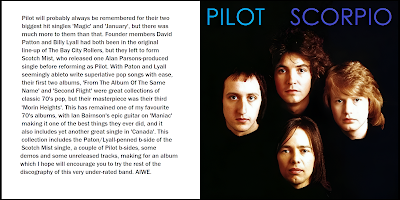
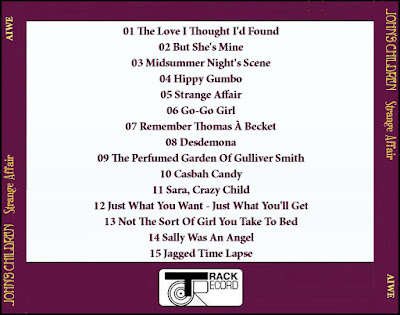
PowepPop Tom has been busy again, making covers for albums from the blog if you want to burn them to a CD, and they now sometimes include a picture for the clear tray. Here are a few examples of the nearly two dozen new ones that he's done.  


In this collection:

Aerosmith - The Aerosmithsonian Archive
Aerosmith - Right Key, Wrong Hole
Brian Eno - MUsic For Films
Copperhead - Copperhead 2
The Doors The Soft Parade
The Flying Burrito Brothers - Together Again
Frank Zappa - ...and on guitar
George Harrison - ...and on guitar
Guns 'n Roses - Use Your Illusion III
Halfnelson - A Woofer In Tweeter's Clothing
Johnny Winter - ...and on guitar
John's Children - Strange Affair
Phil Manzanera - ...and on guitar
Pilot - Scorpio
The Police - Crime Scene
The Police - Shadows In The Rain
Queen - The Miracle
Ray Davies - Return To Waterloo
Ron Wood - ...and on guitar
The Runaways - Yesterday's Kids
Scott Walker - Sings Songs From The Movies
The Attack - Art Attack
Spooky Tooth - Ceremony
The Auteurs - Underground Movies
The Pete Best Combo - I Don't Know Why I Do
Oasis - Coming Of Age
The Pretty Things - Emotions
The Stripes - The Stripes
Trevor Rabin - 90124

Soulseek hint - cd covers aiwe

Friday, February 14, 2025

Pink Floyd - Atom Heart Mother (1970)

Now that I've 'fixed' most of the albums which the artists claimed to have been ruined by the addition of extra orchestration against their wishes, I'm turning to albums that the fans have wanted to hear shorn of their extra instrumentation, beginning with a classic from Pink Floyd. 
Pink Floyd started work on their new album after completing their contributions to the soundtrack for the film Zabriskie Point in Rome, which had ended somewhat acrimoniously. They headed back to London in early 1970 for rehearsals, and the title track of 'Atom Heart Mother' resulted from a number of instrumental figures the band had composed during these rehearsals. Recording of the track commenced at EMI Studios (now Abbey Road Studios) in London, and was somewhat cumbersome, as it was the first recording to use a new eight-track one-inch tape and EMI TG12345 transistorised mixing console (8-track, 24-microphone inputs) in the studio. As a result, EMI insisted the band were not allowed to do any splicing of the tape to edit pieces together, and so Roger Waters and Nick Mason had little choice but to play the bass and drums for the entire 23-minute piece in one sitting, with the other instruments being overdubbed later. By March, they had finished recording the track, but felt that it was rather unfocused and needed something else, and as the band had been impressed with Ron Geesin's composition and tape-editing capabilities, he was handed the completed backing tracks that the band had recorded, and asked to compose an orchestral arrangement over the top of it, while the band went on tour to the US. David Gilmour came up with some of the melodic lines, while the pair of them along with keyboardist Richard Wright worked on the middle section with the choir. 
During the recording of his work in June with the EMI Pops Orchestra, the session musicians present were unimpressed with his tendency to favour avant-garde music over established classical works, and, combined with the relative difficulty of some of the parts, harassed him during recording. John Alldis, whose choir was also to perform on the track, had experience in dealing with orchestral musicians, and managed to conduct the recorded performance in place of Geesin. The orchestral arrangements feature a full brass section, a cello and the 16-piece John Alldis choir, while Pink Floyd mainly provide the backing tracks. Side two opens with three five-minute songs: one by each of the band's three resident songwriters; then closes with a sound effects-dominated musical suite primarily conceived by Mason and credited to the whole group. Waters contributes a folk ballad called 'If', playing acoustic guitar, while Wright's 'Summer '68', features prominent use of brass in places. According to Mason, Gilmour, having had little song-writing experience at that point, was ordered to remain in EMI until he had composed a song suitable for inclusion on the album, coming up with the folk-influenced tune 'Fat Old Sun', and the the final track, 'Alan's Psychedelic Breakfast', is divided into three segments, each with its own descriptive title, joined by dialogue and sound effects of then-roadie Alan Styles preparing, discussing, and eating breakfast. Although the band often played 'Atom Heart Mother' live, both with and without an orchestra, I wanted to hear the original recording as just played by the band, and so have removed the strings, brass and choir from it, as well as stripping the brass section from 'Summer '68'.  


Track listing

01 Atom Heart Mother
02 If
03 Summer '68
04 Fat Old Sun
05 Alan's Psychedelic Breakfast

The Mirage - The World Goes On Around You (1968)

The Venders were formed in the Hertfordshire village of Hunsdon, and featured Del Vincent on lead vocals, Pat Hynes on lead guitar, his brother Pete Hynes on rhythm guitar, Percy Bishop on keyboards, Colin Felstead on bass, and a third Hynes brother, Dave, on drums. Playing local venues and the occasional American air force base, one of the Venders' more successful peers were the Diamonds, featuring lead guitarist Ray Glyn Mynott, who owned a Fender Stratocaster, then hard to come by in the United Kingdom. When Pat Hynes hurt his finger and was unable to play a gig, the Venders asked Mynott to fill in for him, and they were happy enough with his work to invite him to join the band full-time. Mynott agreed, and after shuffling a few members, the new Venders line-up was Pete Hynes on lead vocals, Mynott on lead guitar, Pat Hynes on rhythm guitar, Dee Murray on bass, and Dave Hynes on drums. They made their debut as the opening act for the Tornados on Christmas Eve 1964, and early the following year they decided they wanted a hipper sounding name, and so rebranded themselves The Mirage. Several members were working as session musicians in their spare time, and this moonlighting put them in contact with Dick James, one of England's most successful music publishers. James had installed a recording studio in his London office complex in order to cut song-writing demos, and The Mirage became one of James' house bands, as well as being signed as staff songwriters for his firm. 
After meeting at the studio, the band struck up a friendship with Graham Nash and Allan Clarke of the Hollies, and on their recommendation, The Mirage landed a record deal with CBS. Their first single, 'It's in Her Kiss' (a gender-switched cover of the Betty Everett hit) was issued in June 1965 to little success, although their Nash/Clarke-produced second release, 'Go Away', earned respectable radio airplay. Despite the modest success of 'Go Away' and the use of a Mirage recording, 'I'm Gonna Leave Her', in the hit film 'Georgy Girl', CBS was reluctant to authorize a third single, and the band bided their time, writing songs and committing them to tape at the Dick James studio. CBS eventually let them go, and music entrepreneur Larry Page, an associate of James, signed them and made a deal to release their material through Phillips Records. Dick James handled publishing for the Beatles, and for their first Philips single he arranged for them to be able to cover 'Tomorrow Never Knows' from the then-unreleased 'Revolver', with a band original 'You Can't Be Serious' on the flip. However, conflicting opinions at Phillips led to the single not appearing until December 1966, and as by that time the Beatles' recording of the tune had been out for some months, The Mirage recording suffered at the marketplace. 
Undaunted, the group cut a second single for Phillips, with 'Hold On' arriving in March 1967, and two months later saw the release of 'The Wedding Of Ramona Blair', a charming bit of pop psychedelia which was spun regularly by British pirate radio outlets. It received a smattering of BBC Light Programme play, but it wasn't enough to make it the success it deserved to be. With no hits to their name Phillips dropped The Mirage, and the various members had to make a living as sessionmen, cutting publishing demos, and backing other artists in the James/Page stable, including acting as backing musicians for Reg Dwight's unreleased album 'Regimental Sgt. Zippo, which was eventually released in 2021 as by Elton John. The Mirage landed a new record deal when Larry Page brought them aboard for his new Page One label, but much to the group's annoyance, the A-side for their 1968 Page One debut was a bit of pop fluff called 'Mystery Lady' that was co-written by Page under the nom de plume Larry Stein. Their second Page One release, September 1968's 'Here Comes Jane', wasn't even released under their own name, with the group credited as the Yellow Pages, and when a month later Page One released 'Carolyn', another substandard number written by Page, the band were at the end of their tether, and deliberately broke up just to free themselves of their contract with Page.
A few months later, Ray Glynn, Dave Hynes, Pete Hynes, keyboard player Kirk Duncan, and bassist Jeff Peters signed with Carnaby Records, a new label launched by music promoter Mervyn Conn, and as they were unable to use the name The Mirage, the band called themselves Portobello Explosion. Their first release for Carnaby was 'We Can Fly', a Hynes brothers original backed with a cover of the Bubble Puppy's Texas psych hit 'Hot Smoke And Sassafras', but it made little impression, and following Hynes and Duncan's love of the Band's first two albums, they shifted their music to resemble their rustic country-rock, and so another name-change was needed, this time to Jawbone. Their sole eponymous album came out in 1970, and was a unique mixture of Beatles-influenced pop and rootsy Americana, but reviews were tepid, and Jawbone played no live gigs in support of the release, resulting in the band breaking up. Because they were recording demos at the same time as releasing their singles, by 1968 they had amassed a collection of material that would have made an excellent album, and this is what it would have sounded like.  


Track listing

01 The World Goes On Around You
02 I See The Rain
03 The Wedding Of Ramona Blair
04 Ebaneezer Beaver
05 My Door No. 4
06 Chicago Cottage
07 Can You Hear Me
08 You Can't Be Serious
09 Mrs Busby
10 Gone To Your Head
11 One More Time
12 Is Anybody Home
13 Hello Enid
14 What Do I Care
15 Love Is Where You Find It

Loaded Dice - We Look Good (1979)

Loaded Dice were a hard-working power pop band that were touted as being the next big thing from Western Australia. The formed in 1974, and started out as covers band primarily playing 60's beat, but specialising in Beatles songs. After going through a few line-up changes and settling on Dick Haynes on bass, Marty Mather on guitar, Phillip Flanagan on guitar and Dave Eamus on drums, with all members providing vocals, they started to gather a large local fan base. Around 1979 they signed a record deal with WEA Records in Australia, and released their debut album 'No Sweat' later that year. A couple of singles were issued from it, but neither 'Telephone' nor 'Mam'selle' troubled the charts, and despite the fact that they had some very good songs and were able to make the crowd rock in their hometown, they found it harder to get the local crowds interested when they moved to Sydney. They gave it a good go, but after poor sales pushed their album into the bargain bins, they eventually disbanded and returned home. In 2008 a stash of out-takes and demos was discovered and released on Father And Son Recordings, and tucked away in there were quite a few tracks that could easily have appeared on their official album, so it was easy to extract them and compile what could have been their follow-up to 'No Sweat', appearing some time in 1979 or 1980. 


Track listing

01 It's Alright
02 The Girl Next Door
03 Never Been Kissed
04 Rock And Roll Lady
05 Public Holiday
06 You Look Good
07 It Must Be Love
08 Good Girls Go For Bad Boys
09 Mr. Wilkins
10 Young Girls
11 Promises
12 Fooling
13 Someone Who Loved Me More
14 You Only Hurt Yourself
15 Joe Cool
16 Love Is Hard To Find

Tuesday, February 11, 2025

The Dodos - The World Wants To Know (1963)

As most people should have worked out by now, the recent post by The Chyknhawks was an AI generated pastiche of The Byrds, and there are few of these on the net at the moment, with a '1967 single' by The Brothers Gee, which bears more than a passing resemblance to late-60's Bee Gees, while Feel Flows takes on the Beach Boys at their own game. The Beatles are not spared either, and have the biggest catalogue, although to be honest they are the least convincing imitations. That's not to say that the songs are not worth hearing, and the spoof biography has been put together with tongue very much in cheek, while the covers have been lovingly created to look of the period that the 'album' came out. So here is the first album from The Dodos, 'released' in 1963, accompanied by this bio.   
Released on August 13th 1963, the debut album by the Dodos was a resounding success both critically and financially. Shooting straight to number one on the UK charts, it was the first of many number one albums. Considering the group consisted of very young men (the youngest at 16 and oldest at 20), the fact that the entire album was made up of self penned songs was truly extraordinary, and would inspire greatness from their contemporaries who until then had filled albums with filler and cover tracks. At this time, the music business was fuelled by singles, as most record buyers couldn't afford full albums, and most albums as said before were mainly full of filler surrounding hit singles. The Dodos began a trend in the English music scene to treat albums as something just as special as singles, and were the first UK band to record different versions of songs for their singles and albums. This was suggested by their producer Tolly Williford Gipson, and the boys loved the idea, and it became an industry standard later in the UK. Yet another example of the Dodos being innovators in music. The album was famously recorded in one feverish day, with a few overdubs done the following day. Recorded on a BTR-2 Reel To Reel tape machine, the rhythm track was recorded on one track with the vocals on the other. this allowed T.W.G. to bring vocals up or down in the mix, ensuring a clean vocal performance on every recoding.


Track listing

01 The World Wants To Know
02 Am I The Bad Guy
03 More Than You Know
04 Empty Spaces
05 I Know A Place
06 Listen To My Heart
07 I Want To Make You Mine
08 Smiles and Glancing Looks
09 I Saw Her Dancing There
10 Why Me
11 Love Me Now
12 Don't Leave Me Now

Count Five - Enchanted Flowers (1968)

In the early 1960's school students John "Mouse" Michalski and Roy Chaney had played guitar and bass respectively in a succession of local bands such as Johnny & the GTOs and the Renegades, specializing in surf instrumental music. They changed their name to The Squires and added Kenn Ellner as a singer, and tried picking up on the British Invasion sound, and in late 1964 they added Irish-born guitarist, singer, and songwriter Sean Byrne, and the band made a local name for themselves over the ensuing year. In 1965 organist Phil Evans quit for personal reasons and drummer Skip Cordell joined another group, and with the addition of his replacement, Butch Atkinson, the group changed their name to Count Five. It was around this time that Byrne was putting the finishing touches to a song he'd been outlining in his head, ultimately called 'Psychotic Reaction', and when it was finished it became a showcase for the band's abilities, especially guitarists Michalski and Byrne, and they began working it up into the crescendo of their stage act. At first it didn't seem to do much good, as the group was turned down by Capitol Records, Fantasy Records, and a handful of other California-based companies, but after working out a new arrangement of 'Psychotic Reaction' with the band, local DJ Brian Lord got the song and the group placed with Double Shot Records, a Los Angeles-based label. 
When they released the song as the band's debut single it eventually made number five nationally and number one in Los Angeles. Unfortunately, they were never able to follow up the hit with anything even remotely as successful, and although an album was rushed out, featuring the hit plus some ill-conceived originals, nothing that the group did subsequently seemed to work. They tried reusing the same formula, working in a slightly more folk-rock vein, and even attempting some fresh guitar pyrotechnics (on 'The World' and 'Pretty Big Mouth' and, in a psychedelic vein, on 'Peace Of Mind'), plus a pair of pretty fair Who covers, but by 1967 it was clear that the group's days were numbered. They carried on releasing singles on Double Shot during 1967 and 1968, but the strain of maintaining music careers while attending college, which they had to do in order to keep their draft deferments, took its toll, as did the dwindling bookings, as memory of 'Psychotic Reaction' faded. In the end, after an attempt by the label to keep Byrne as the only active member, Count Five ceased to exist. Although they never managed to record another 'Psychotic Reaction', some of their later singles were not bad, and if we take those and add some previously unreleased recordings from the same timeframe then Double Shot could have put together a second album from the group some time in 1968. As the label never got round to it then it's up to me to do it for them. 


Track listing

01 People Hear What I Say
02 Merry-Go-Round
03 Hold Me Close
04 Teeny Bopper, Teeny Bopper
05 Revelation In Slow Motion
06 Declaration Of Independence
07 You Can't Get Me
08 Contrast
09 Enchanted Flowers
10 Move It Up
11 So Much
12 God Alone (Above)
13 Mailman
14 You Must Believe Me

TG4 - Time For The New (2002)

TG4 was an American R&B female quartet, consisting of Keisha Henry, Davida Williams, Sevyn Streeter (aka Ambee), and Ashley Gallo. The group was assembled by Chris Strokes and was signed to T.U.G. Entertainment, where Stokes served as their manager. He offered Streeter the first spot in the T.U.G./A&M group after she opened for B2K and IMX at a concert in Orlando, Florida in early 2001. Davida, Ashley, and Keisha fell in line after a string of successful auditions, and the name TG4 is short for Tom Girls 4. The group's only major single was 'Virginity', which peaked at number 88 on the US Billboard R&B chart in 2002, as their second single, '2 Minutes', failed to chart on any Billboard chart, and after the group parted ways with their original label, their album, 'Time For The New', was shelved indefinitely. Williams left the band to focus on her acting career, and the remaining members renamed themselves Tomgirls 4 Eva, and they were signed to the Soul Chemistry label, although they didn't stay together for long, and disbanded shortly afterwards. Streeter signed a deal with Jive Records and the RichCraft label in 2007 as a member of Rich Harrison's girl group, RichGirl, and although the group did not release a full album, work on a self-titled debut had begun in 2009, with a planned release in 2010 or 2011. As a precursor to that cancelled RichGirl album, here is what could have been TG4's debut release from 2002. 


Track listing

01 Intro 
02 Can't Trust A Friend (feat. Needa S)
03 Zip it Up (feat. Needa S)
04 Virginity
05 Pop The Question
06 Busted
07 Sweat
08 Way Gone
09 Two Minutes
10 My Pillow
11 Best Friends
12 Secretly

Friday, February 7, 2025

Yes - Time And A Word (1970)

After the release of their debut album 'Yes' in July 1969 for Atlantic Records, Yes resumed extensive touring across the UK. The line-up of the group at this time included lead vocalist Jon Anderson, guitarist Peter Banks, bassist Chris Squire, drummer Bill Bruford, and organist Tony Kaye, and towards the end of 1969 they booked time at Advision Studios in London, during gaps between shows, to record their second record. At Advision, Yes were joined by producer Tony Colton, a friend of Anderson's who was also the singer of the rock band Heads Hands & Feet, and audio engineer Eddy Offord was also brought in to assist Colton in the album's production, because of his skills and hard work. The group continued to follow their early musical direction of performing original material and rearranged cover versions of songs by pop, jazz, and folk artists, and the album eventually consisted of eight tracks, with two covers, as did their debut. A discussion amongst Squire, Anderson, and Colton during the writing process led to the decision of incorporating orchestral arrangements into some of their new songs, as Anderson felt that Banks and Kaye had not worked together to create a strong sound that their new arrangements required. To attempt to solve this, the group thought about using a Mellotron, and tested one out, but the idea fell through. Instead, a brass section of session players and a string section formed of students from the Royal College of Music were hired to perform arrangements written and conducted by Tony Cox. 
Banks did not support the idea of an orchestra and thought it merely followed what rock bands Deep Purple and the Nice had already done, and also he argued that it merely played parts originally written for the guitar or organ, leaving his active participation on the album a minimum, or his guitar buried in the album's mix. Banks also disagreed with the decision to have Colton produce the album, and claimed that he lacked the experience, with his ability being questioned by Squire, who recalled one incident during the mixing of 'No Opportunity Necessary, No Experience Needed', which Colton mixed using "a crappy pair of cans that did not reproduce bass", rather than using the studio's monitoring equipment. He then asked for more bass, but Squire and Howe noticed that the bass levels on the monitors were already high, and the bass is still noticeably overpowering on that track. The album's six original tracks are credited to Anderson, along with either Squire or David Foster, Anderson's former bandmate in The Warriors, and Anderson's lyric content began to move from simple love themes to topics of greater scale. The album received a mixed reception, but a review by Roy Carr in New Musical Express in August 1970 hailed it as one of the best releases of the year. Following the recording of the album in early 1970, tensions within the band increased, and Banks was asked to leave, with Steve Howe replacing him that June. To hear what Banks wanted the album to sound like, I've removed all the strings and brass, and boosted the organ to fill out the gaps, so that we now have 'Time And A Word' as just played by the band themselves. The general consensus is that the one track to benefit from the orchestration is 'Clear Days', but I've still removed it just so that you hear what it would have sounded like in a stripped-down version. To distinguish it from the standard edition I've housed it in the US version of the cover, which features Steve Howe, even though he didn't play on the record.  


Track listing

1 No Opportunity Necessary, No Experience Needed
2 Then
3 Everydays
4 Sweet Dreams
5 The Prophet
6 Clear Days
7 Astral Traveller
8 Time And A Word

Pink Floyd - Comfortably Numb (2023)

As a special treat here is something that I found on Youtube recently, where DoctorBlue has taken a number of live performances of 'Comfortably Numb' and mixed them all together to make a 26-minute take of the song, most of which comprises the guitar solo. Not much else to say about it, other than I've removed the applause at the end so that the bombastic ending perfectly rounds off what's gone before. 


Track listing

01 Comfortably Numb

The Majority - Tears Won't Help (1969)

Formed in Hull, England, as the Mustangs in the early '60s, the band changed their name to The Majority around the time they moved to London in 1965. With more of an American pop/rock vocal harmony style than most British Invasion groups, they tried their hand at a variety of material over the next few years, most of it coming from outside songwriters. After securing a deal with Decca Records that same year they released their first single, 'Pretty Little Girl', in July 1965, and as a minor coup of sorts, for their second single of that year, 'A Little Bit Of Sunlight', they managed to gain access to a Ray Davies composition that never found a place on a 1960's Kinks record. January 1966 saw the release of their third single 'We Kiss In A Shadow', and once again they managed to get hold of a Davies song, adding 'Ring The Bells' to the b-side. In their search for chart material, the Majority also tried compositions written or co-written by such luminaries as John Carter, Twice As Much, and Chip Taylor, but they never hit a commercial or artistic gold mine, with the production varying from the lush to straightforward mod-ish rock. The best they ever managed was the inclusion of their 'One Third' on the 'Nuggets, Vol. 2' box set, which was a collection of overlooked '60's British Invasion/early psychedelic-like rock from non-U.S. countries. 
The Majority's eighth and final single, 'All Our Christmases', would generate another collectible for future British '60s rock aficionados to hunt down in subsequent decades, as it was written but not recorded by the Bee Gees, but after some major line-up shuffles and work backing singer Barry Ryan in concert and in the studio, the Majority relocated to France, where they renamed themselves Majority One in 1969, and continued their recording career with a similar but more sophisticated musical approach. After a few singles released on the Dutch Pink Elephant label in 1970, they released their sole eponymous album in 1971, and although it didn't fare that well at the time, it is now highly regarded by collectors of early 70's prog. While their music is fairly enjoyable stuff, it's easy to hear why they became a sort of "in-between" group, with too much going for them to get dropped from their label, but not enough going for them to score hit records. One reason is that they didn't establish much of an identity, with their arrangements veering from mild British Invasion sounds to quasi-Walker Brothers productions and late-'60s British orchestrated pop with the slightest of psychedelic touches. This could be the reason that Decca never offered them the opportunity to record an album, but if they had then the band could have included a few of their better singles in the track listing and it might have ended up sounding something like this. 


Track listing

01 One Third
02 Tears Won't Help
03 Let The Joybells Ring
04 We Kiss In The Shadow
05 Simplified
06 Pretty Little Girl
07 Charlotte Rose
08 A Little Bit Of Sunlight
09 Wait By The Fire
10 Time Is On Your Side
11 To Make Me A Man
12 Ring The Bells
13 People
14 I Don't Wanna Be Hurt No More
15 All Our Christmases
16 Running Away With My Baby

Yo Yo - Ebony (1998)

Yo Yo (born Yolanda Whitaker on August 4, 1971 in Los Angeles, California) is a female hip-hop artist and actress who is a protege of rapper Ice Cube, making her first appearance on record in 1990, when she guested on Ice Cube's album 'AmeriKKA’s Most Wanted'. on the track 'It’s A Man’s World'. A year later in 1991, Yo Yo released her debut single 'You Can’t Play With My Yo-Yo' (featuring Ice Cube) which peaked at number 36 on the Billboard Hot 100, and in March she released her debut album 'Make Way For The Motherlode' on EastWest Records, which peaked at number 74 on the Billboard 200 and which was a critical success. The follow-up single, 'Ain't Nobody Better', spent eleven weeks on the charts, and the final single from the album, 'Stompin' In the '90s' peaked at number 2 on Billboard’s Hot Rap Singles chart. During that same year she made her acting debut in the film 'Boyz In The Hood', and in June 1992 she dropped her second album 'Black Pearl', which peaked at number 145 on the Billboard 200. 1993 was a busy one for her acting career as she starred in films such as 'Sister Act 2: Back In The Habit', 'Menace II Society', 'Strapped' and 'Who’s The Man?', as well as releasing her third album 'You Better Ask Somebody'. The lead single 'The Bonnie And Clyde Theme' topped Billboard’s Hot Rap Singles chart, and was followed by 'Westside Story' and 'IBwin’ Wit My CREWin'', although neither reached the same heights as the first single. After that Yo Yo’s music career took a backseat as she focused on her acting career, securing a recurring role on the '90's comedy series 'Martin', as well as appearing on the FOX Network television drama 'New York Undercover', and in the 1995 film 'Panther'. 
In 1994 she signed a deal with Warner Bros. television to produce a sitcom called 'Shifting Gears', but the series was never picked up, and so she returned to music and two years later she released her fourth studio album 'Total Control', which didn't generate as much success as her previous records, and the two singles from it didn’t make the charts at all. After a lawsuit for an uncleared sample on the album, it was pulled from the shelves. Her acting career continued with appearances in the 1997 films 'Sprung' and 'Trials Of Life', while at the same time recording tracks for her fifth studio album 'Ebony', which was due to be released in September 1998, but it ended up being shelved because the guest appearances on it weren't properly contracted to work with an artist on EastWest Records. She was later released from her record contract, and so concentrated on her acting career, although after 2000 not much was heard from her until 2004, when she did voice work on the video game 'Grand Theft Auto: San Andreas'. In 2005 she returned to the music business with a mix-tape remix of R&B singer Ciara's single 'Goodies' and rapper The Game's single 'How We Do', but 'Ebony' has stubbornly refused to appear, and so here it is so that we can hear what would have been the rapper's final album. 


Track listing

01 Intro
02 Countin' Money (feat. Lil Shawn)
03 Do You Wanna Ride? (feat. Kelly Price)
04 Iz It Still All Good? (feat. Gerald Levert)
05 Get Up And Do Your Thing
06 Never Gonna Fall Again
07 Fantasy (feat. Lil Shawn)
08 Let Me Be The One
09 Good Girl
10 I Would If I Could (feat. Missy Elliott)
11 Pass It On (Part 2) (feat. Lady T, Big Chan, Nic-Nak, And Shorty G)

Tuesday, February 4, 2025

Gee Bros - One Word Songs (1969)

Gee Bros (also spelled as Geebros and G Bros) was a short-lived Dutch band from Apeldoorn, The Netherlands, active in the 1960's. They formed in 1964 as The Goldstar Brothers, and were made up of siblings André Groote, Ben Groote, Henk Groote, with Willem Antonius and Lol Nijhuis. Their first single was on an EP with three other artists on Lion Tops Records, featuring Yvonne Toelnaar, The Jets, and Rudi Seedorf, and this prompted Omega Records to offer them a deal, releasing two singles in 1964, before they moved to Phillips in 1966 for 'You Can't', which was their final release under the name of The Goldstar Brothers. In 1967 they rebranded themselves as Gee Bros, replacing Antonius with Cor Mestebeld, and rekindling their relationship with Omega Records, releasing the 'Let Me Find The Sun' single in January 1968. This was followed by 'Ev'ry Day' in May, after which they left Omega and signed to Pink Elephant Records for November 1968's 'Henry The Horse' single, which was a number 24 hit in their native country. In 1969 Hennie Backer replaced Nijhuis, and their final two singles appeared that year, after which the band broke up. The brothers stayed in the music business, performing under different names, including Crying Wood and Air Bubble, and in 1972 they released one final single as Gee Bros, with 'Canta Canta Libre' appearing on the Negram label. Despite being almost completely unknown outside of The Netherlands, they produced some great pop music, and so here are all their recordings collected together, to give us an idea of what was going on in Holland in the mid-to-late 60's.


Track listing

01 Nothing's Changed (single as The Goldstar Brothers 1964)
02 If I Were You (b-side of 'Nothing's Changed')
03 Zeg Mij Eens Even (single as The Goldstar Brothers 1964)
04 De Vakantie Is Voorbij (b-side of 'Zeg Mij Eens Even')
05 You Can't (single as The Goldstar Brothers 1966)
06 May Be (b-side of 'You Can't')
07 Let Me Find The Sun (single 1968)
08 She (b-side of 'Let Me Find The Sun')
09 Ev'ry Day (single 1968)
10 The Shadow Of Stone (b-side of 'Ev'ry Day')
11 Henry The Horse (single 1968)
12 Lively Liquors (b-side of 'Henry The Horse')
13 One Word Song (single 1969)
14 Made In Hong Kong (b-side of 'One Word Song')
15 It's In The Air (single 1969)
16 Shapes Of Blue (b-side of 'It's In The Air')

Skip Bifferty - On Love (1968)

Skip Bifferty were formed when Newcastle upon Tyne band The Chosen Few parted company with their singer Rod Hood and guitarist Alan Hull, later of Lindisfarne, and recruited Graham Bell to replace him. A name change quickly folllowed, and the newly christened Skip Bifferty soon signed a contract with RCA Records. The group released a number of psychedelic singles, including the flower-power 'Happy Land', and 'Man In Black', which was produced by Steve Marriott and Ronnie Lane of The Small Faces, and in 1967 they released their self-titled album 'Skip Bifferty'. Some of their songs were covered by established artists such as Cilla Black, The Tremeloes and The Kingsmen, and they built a following on the live circuit, including touring with The Who in October 1968. However, a management dispute with their manager Don Arden caused the band to walk out en masse, eventually leading to the group's demise under that name in November 1968, re-appearing the following year under the pseudonym Heavy Jelly, and with Paul Nichols replacing Jackman on drums. They released one single on Island Records, 'I Keep Singing That Same Old Song', but when their true identity was uncovered they were let go by Island and they split up soon after. Together with Turnbull and Gallagher, Bell formed Bell & Arc in July 1971, and later Turnbull and Gallagher reappeared as Loving Awareness, who later morphed into Ian Dury's backing band The Blockheads. Skip Bifferty were one of the lucky few late-60's psychedelic bands who were allowed to make an album, and quite rightly it's become regarded as something of a classic of the genre. However, they were not around long enough to released a follow-up to that record, even though they had recorded enough material to make it. A couple of these tracks are taken from their many radio sessions, but they fit quite nicely with the rest of the songs, so here is what Skip Bifferty's second release from 1968 could have sounded like. 


Track listing

01 On Love
02 Happy Land
03 Disappointing Day
04 Higher Than The Clouds
05 Cover Girl
06 Aged Aged Man
07 Man In Black
08 The Hobbit
09 Reason To Live
10 In The Morning
11 Once
12 I Don't Understand It
13 The Lion & The Unicorn
14 Round And Round

Paul at albumsthatshouldexist has also posted a couple of albums by this band, but he split them into BBC Sessions and a stray tracks compilation, including the Heavy Jelly recordings, so if you want to hear more then pop over there. 

Canela Cox - Canela (2001)

Canela Cox was born in 1984 in Los Angeles, California, moving to Amsterdam at the age of 12, where her mother, Rocq-E Harrell, a former Diana Ross' background vocalist, performed as an R&B singer and recording artist. Upon moving back to the United States at age 18, Cox continued to pursue her musical endeavours, performing with numerous musical groups throughout Los Angeles. In 2000 she was featured on Jennifer Lopez's multi-platinum selling single, 'Love Don't Cost A Thing', and although she was uncredited for her work on the song, she performed as Lopez's background vocalist for numerous tours and new songs. While performing with Lopez at a Los Angeles concert, her talent was recognized by Rodney Jerkins, who brought her to DreamWorks Records' attention, and was immediately signed to the label in 2001. She began to record her self-titled debut album, which featured production by Darkchild, Tim & Bob, Lil' Mo, Fred Jerkins III, Brycyn Evans, & DJ Clue, and DreamWorks announced at the time that it would be released sometime in December 2001. Her buzz single, 'Sponsor', was released to radio in March 2001, and a DJ Clue remix, featuring Fabolous, was also released to mixtape circuits, and it received heavy underground play. Despite this media onslaught, both versions of the single failed to chart, and so a new Darkchild-produced single, 'Everything', was released to radio as the official lead single from the album. However, 'Everything' suffered the same fate as 'Sponsor', and because of these two perceived failures, DreamWorks Records put a halt on the release of her album. Before the release date could be revisited, DreamWorks Records was bought by Universal Music Group, which caused the label to fold, and so her debut was permanently shelved. Some months after Cox left DreamWorks she co-wrote Anastacia's 2002 single 'Why'd You Lie To Me', and she was also the female vocalist on rapper Won G's 2004 single 'Caught Up In The Rapture', and then in 2004 she signed to Genuine Entertainment and began recording another album. Its buzz singles, 'Blazed' and 'Bedrock', were released through Monopoly Records in 2004, but neither single managed to chart, and because of a lack of promotion, and failed attempts to put out a single properly, she left Monopoly Records, and began singing and song-writing for other artists. In 2006 she joined pop band Anything But Monday, who featured in the reality show '30 Days 'til I'm Famous', but they too have yet to release a debut album, as this has also been  delayed several times. As she doesn't seem to have had much luck in getting a record of her own actually released, here is a chance for us to hear that abandoned debut. 


Track listing

01 Everything 
02 Sponsor (I Need I Need I Need)
03 Love, Lust, Crime
04 Friend Of Mine
05 I Can't Let Go 
06 Outta Here
07 Play Your Games
08 It Feels Just Right
09 1 Day
10 Trust Me

Friday, January 31, 2025

Grateful Dead - Terrapin Station (1977)

'Terrapin Station' is the ninth studio album by The Grateful Dead, and was released on 27 July 1977 on the band's new label, Arista Records. When their own record label folded, combined with a change in their management, The Grateful Dead signed with recently founded Arista Records, as label head Clive Davis had been interested in working with them since his time at Columbia Records. A proviso of signing to the label was that they had to agree to work under an outside producer, which was something they had not tried on a studio album since 1968's 'Anthem Of The Sun'. Keith Olsen was chosen to produce, and the band temporarily moved to Los Angeles, as Olsen preferred to work at Sound City, where he had recently achieved success producing Fleetwood Mac's 1975 comeback album. Rhythm guitarist Bob Weir's 'Estimated Prophet' examines a character's delusions of grandeur and California's propensity for false prophets, while 'Dancin' In The Streets' is a cover of Martha & The Vandellas' 'Dancing In The Street' from the early days of the band, given a new arrangement that prominently features singer Donna Godchaux. 'Sunrise' was Donna's first singing-songwriting effort for the Grateful Dead, and has been acknowledged as a tribute to the band's recently deceased road manager, Rex Jackson. Bassist Phil Lesh's 'Passenger' was inspired by Fleetwood Mac's 'Station Man', and Weir's 'Samson & Delilah' was a new arrangement of Reverend Gary Davis's traditional song, retelling the story from the Tanakh. 
Lyricist Robert Hunter wrote the lyrics for the first part of the 'Terrapin' suite in a single sitting, during a rare Bay Area lightning storm, and on the same day, driving across the Richmond–San Rafael Bridge, Jerry Garcia was struck by the idea for a singular melodic line, turning his car around and hurrying home to set it down before it escaped him. When they met the next day, Hunter showed him the words and he said, "I've got the music". They dovetailed perfectly. Once recording was complete, Olsen then added strings, horns and choirs to the tracks at studios in London, unrequested by the band. For 'Estimated Prophet', Donna's vocals were multi-tracked and he had Tom Scott add lyricon and saxophone. In a further quest for commercial potential, he ignored other contributions, secretly erasing Mickey Hart's timbale part entirely, and then hired a string section to fill out that passage instead. Weir also felt that all the orchestration and choral stuff was given too much prominence, and tried to negotiate with Olsen, but he stuck to his guns. Though the heavy sound production was of its time, it was unusual for a Grateful Dead album and a departure from their earlier, edgier psychedelic albums or their more recent Americana or jazz-blues efforts. Garcia said Olsen had "put the Grateful Dead in a dress", and was unhappy with the string sections and choirs on the title suite, complaining "It made me mad. He and Paul Buckmaster had an erroneous rhythmic sense; they changed it from a dotted shuffle to a marching 4/4 time." Reaction to the production from both fans and critics was similar, although the songs themselves received  a more positive response. This version of the album is more what the band actually wanted it to sound like, with the songs stripped of their strings, horns and choir. 


Track listing

01 Estimated Prophet
02 Dancin' In The Streets
03 Passenger
04 Samson & Delilah
05 Sunrise
06 Terrapin Part 1

The Merseys - Some Other Day (1968)

Guitarist and singer Tony Crane was fifteen years old and bassist and singer Billy Kinsley was just fourteen when they were introduced by a mutual friend and discovered they could do Everly Brothers-style harmonies with ease. The two formed a band in 1961, initially called the Mavericks and briefly known as the Pacifics, before the booker at Liverpool's Cavern Club gave them the name the Merseybeats. They were soon gigging regularly in Liverpool and the surrounding area alongside fellow Merseyside acts like the Fourmost, the Swinging Blue Jeans, and Gerry & the Pacemakers, and they often shared bills with the Beatles. In 1963, they signed with Fontana Records, and their debut single, 'It's Love That Really Counts' was a success, peaking at Number 24 on the British Pop chart, while their second disc, 'I Think Of You', was plugged by their pals The Beatles on the pop music show Juke Box Jury, and their endorsement helped it make the Top Five in February 1964. While the band was selling records and playing good-paying engagements, little of the money was making its way to the musicians, which Kinsley believed was due to their manager shortchanging them, so he responded by leaving The Merseybeats, and Johnny Gustafson, a veteran of the band the Big Three, took over on bass and vocals. By the end of 1965 Gustafson had been fired by the group's management, supposedly for asking too many questions about their finances, and so Crane responded by breaking up The Merseybeats. 
In the immediate wake of the breakup, Crane reunited with Kinsley and launched a vocal duo they called the Merseys, and with Fontana opting to maintain their relationship with Crane and Kinsley, their first single as the Merseys, 'Sorrow', was a major hit, topping out at Number 4 on the U.K. singles charts. The duo headed out on tour with a band called the Fruit Eating Bears serving as their backing band, including guitarist, Joey Molland, would go on to become an international star with Badfinger. By this time, Kit Lambert, who was managing the Who, also took on the Merseys as clients, and he spirited away Pete Townshend's 'So Sad About Us' for the group to record as their second single, after which The Merseys toured as the Who's opening act, and in early 1967 they were added to the bill of a package tour headlined by American soul stars the Four Tops. Increasingly disappointed with Lambert, who they felt was spending too much time on the Who while The Merseys' records were failing to chart, Crane and Kinsley fired him and finally signed on as part of Brian Epstein's stable of talent. Less than a month later, Epstein died, which did little to help the group's prospects or morale. After a pair of 1968 singles came and went with little notice, Crane and Kinsley brought out one final single, with 'Honey Do' appearing under the group name Crackers, before retiring the banner the Merseys. Kinsley would later formed the band Liverpool Express, who had some success in the 70's, and in 1973 they were suddenyl all over the music press when David Bowie recorded a cover of 'Sorrow' for his 'Pin Ups' album, and the song became a hit for the second time. The Merseys were more than a one-hit wonder, though, as most of their other songs were fine examples of mid-60's pop, and it's a shame that they never got around to recording an album, and it could have sounded something like this. 


Track listing

01 Rhythm Of Love
02 Change Of Heart
03 I Hope You're Happy
04 Nothing Can Change This Love
05 Sorrow
06 Some Other Day
07 Is It Love
08 Honey Do
09 Penny In My Pocket
10 Lovely Loretta
11 The Cat
12 So Sad About Us
13 It Happens All The Time
14 Dreaming
15 Love Will Continue

Talent - Bulls Eye (2000)

Talent was an R&B group from Kansas City, Missouri, consisting of Earnest "Bishop" Dixon, Keith "Castor Troy" Murrell, and Marlon "Casino" Hatcher, and they were signed to Rockland Records by R. Kelly after hearing them sing a rendition of Boyz II Men's 'End Of The Road'. When they left their native Kansas City to work with R. Kelly in Chicago, they expected to stay only two weeks, but that eventually became two years. The end result was their debut album 'Bull's Eye', which was slated for release 13 March 2000, and which was mostly written and produced by Kelly. 'Celebrity' was released as a single, but could only reach number 90 on the Billboard Hot R&B/Hip-Hop songs chart. The album features a generous helping of melodic ballads, and a mix of upbeat, hip-hop-inflected songs such as 'Breakin’ Up', 'Everywhere I Go' and the Trackmasters/Kelly collaboration 'All Up In His Ride' add an edge to an otherwise silky-smooth debut. At the time the trio signed with Kelly, none of them were established songwriters, but since then Dixon has written Profyle’s No. 1 R&B Motown single 'Liar' and Joe's forthcoming single 'Stutter', both produced by Teddy Riley. Promo discs of the album were sent out, but the final release was eventually cancelled and it remains unreleased, so here it is for us to judge if that cancellation was the right decision. 


Track listing

01 All Up In This Ride                        
02 Breakin' Up                                  
03 Celebrity                                  
04 Every Which Way                            
05 Everywhere I Go                            
06 I Belong                                   
07 My Heart Will Go On                        
08 Description Of Love                          
09 Til The Angels Sing                        
10 Together We Stand                          
11 Turn To Lies

Tuesday, January 28, 2025

The Chyknhawks - Mister Organ Grinder (1965)

The Chyknhawks set the tone for the California music scene in 1965, consisting of four young men who had previously come from folk music, and who's shared love of the Dodos from the UK had prompted them to try and merge folk music with beat music, forming something new and original. The four original members are Gary Cline, James McGunn, Daniel Bing & Mike Claire, and the debut album from the Los Angeles quartet was released on June 3rd, 1965. Entitled 'Mister Organ Grinder', the title was taken from their first single of which an alternate take is featured here, and the twelve tracks on the album were written between 1964 and 1965, and include song-writing from three of the four members of the group. Gary Cline dominates the album as far as song-writing credits go (having written or co-written nine of the twelve tracks), with James McGunn getting co-writing credits on four tracks and Daniel Bing getting three solo writing credits. Seen as a very solid start to a short but fruitful career as a band, The Chyknhawks would soar higher on later albums, but as all bands do eventually, they would get too close to the sun and by the end of 1969 the band would split for good. Between this album and 1969 though they would innovate and inspire, and would have multiple line up changes, and this debut album is a great appetizer for what would come.


Track listing

01 Far Out  
02 The Chimes Of Athena 
03 Mister Organ Grinder 
04 No One Should Cry 
05 Jack Of All Shame 
06 Falling Again 
07 King Of The Lost 
08 Is It Me, Man 
09 Here Within You 
10 All I Wanted To Do 
11 Believe In Yourself  
12 I Knew You'd Want Me 

Check out their bandcamp page here